Southwest Michigan field crops update – June 4, 2026
 Print
Print Email
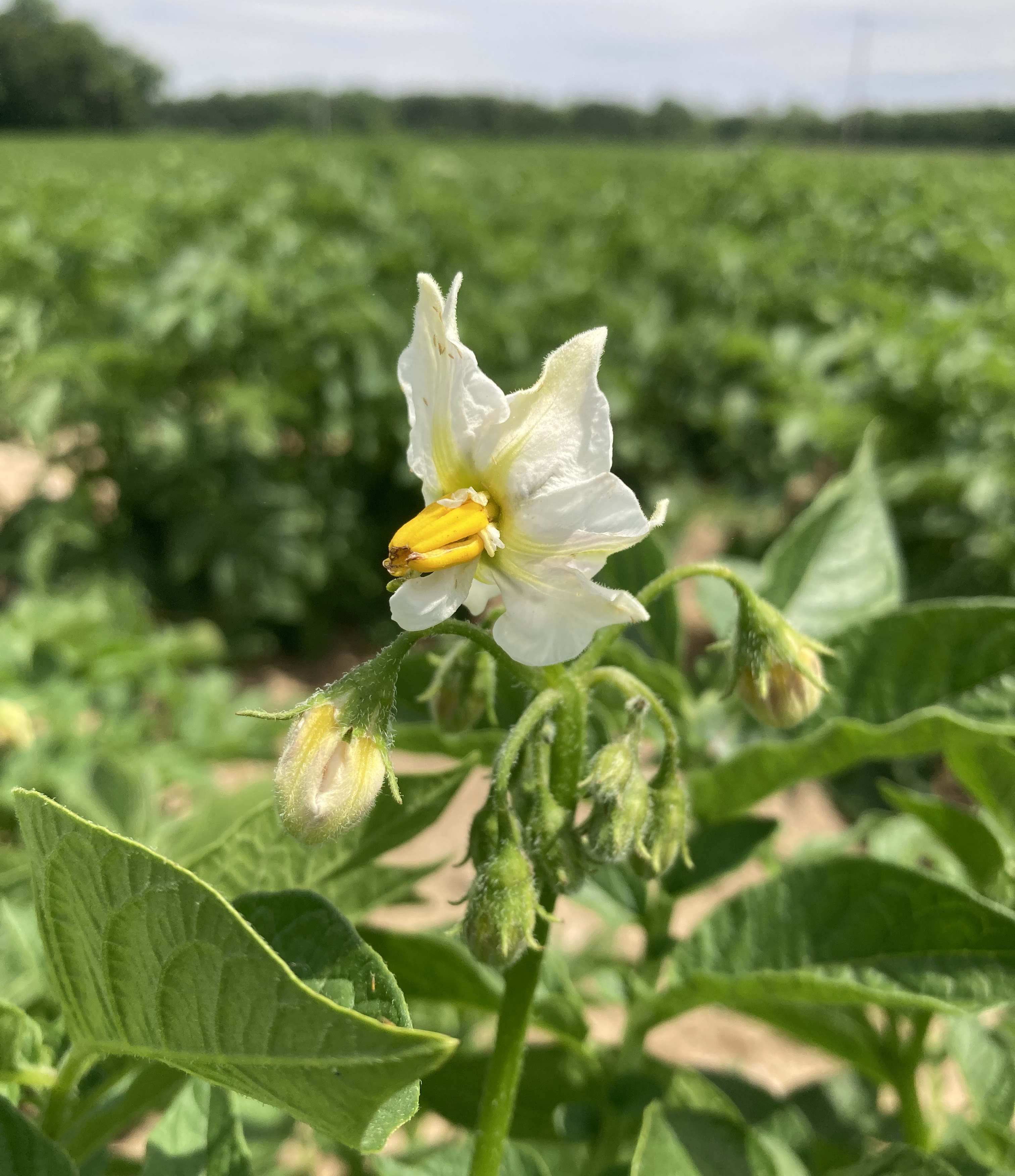
EmailSporadic potato flowering began. Great progress was made on planting and field work.

Weather
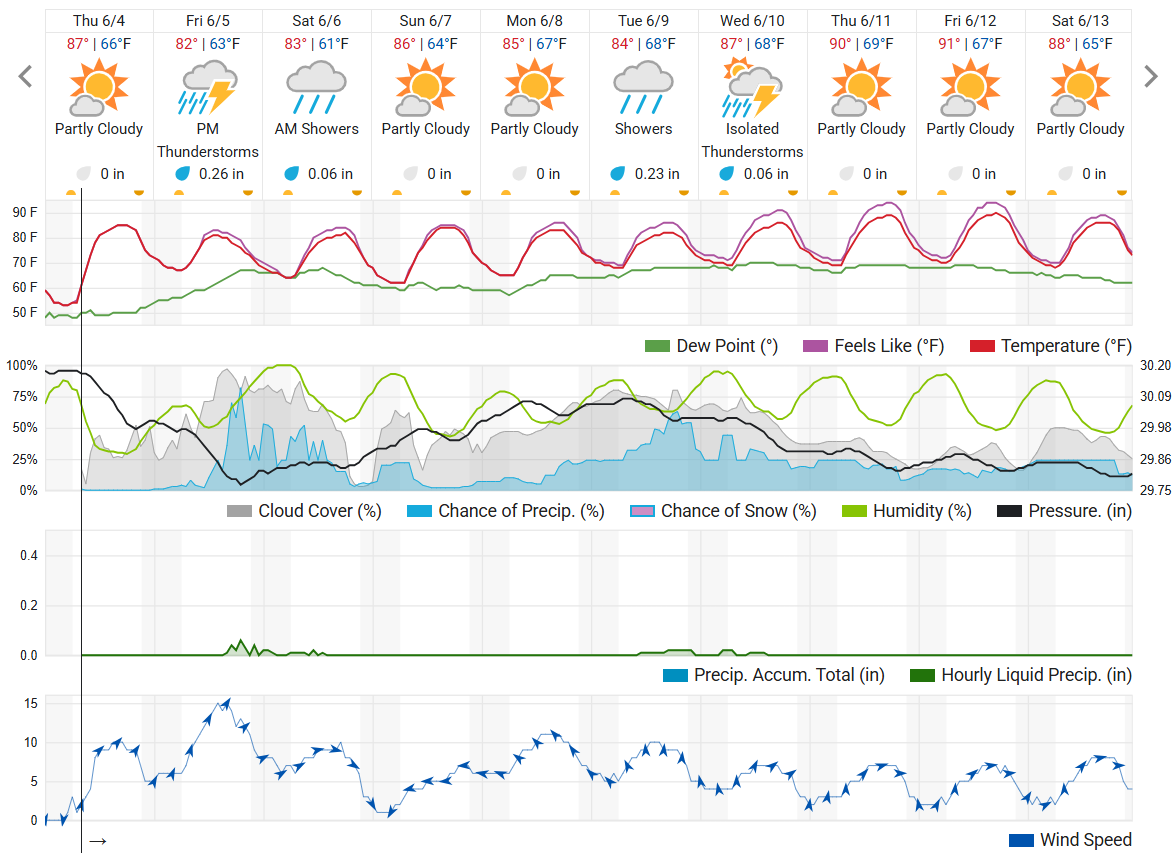
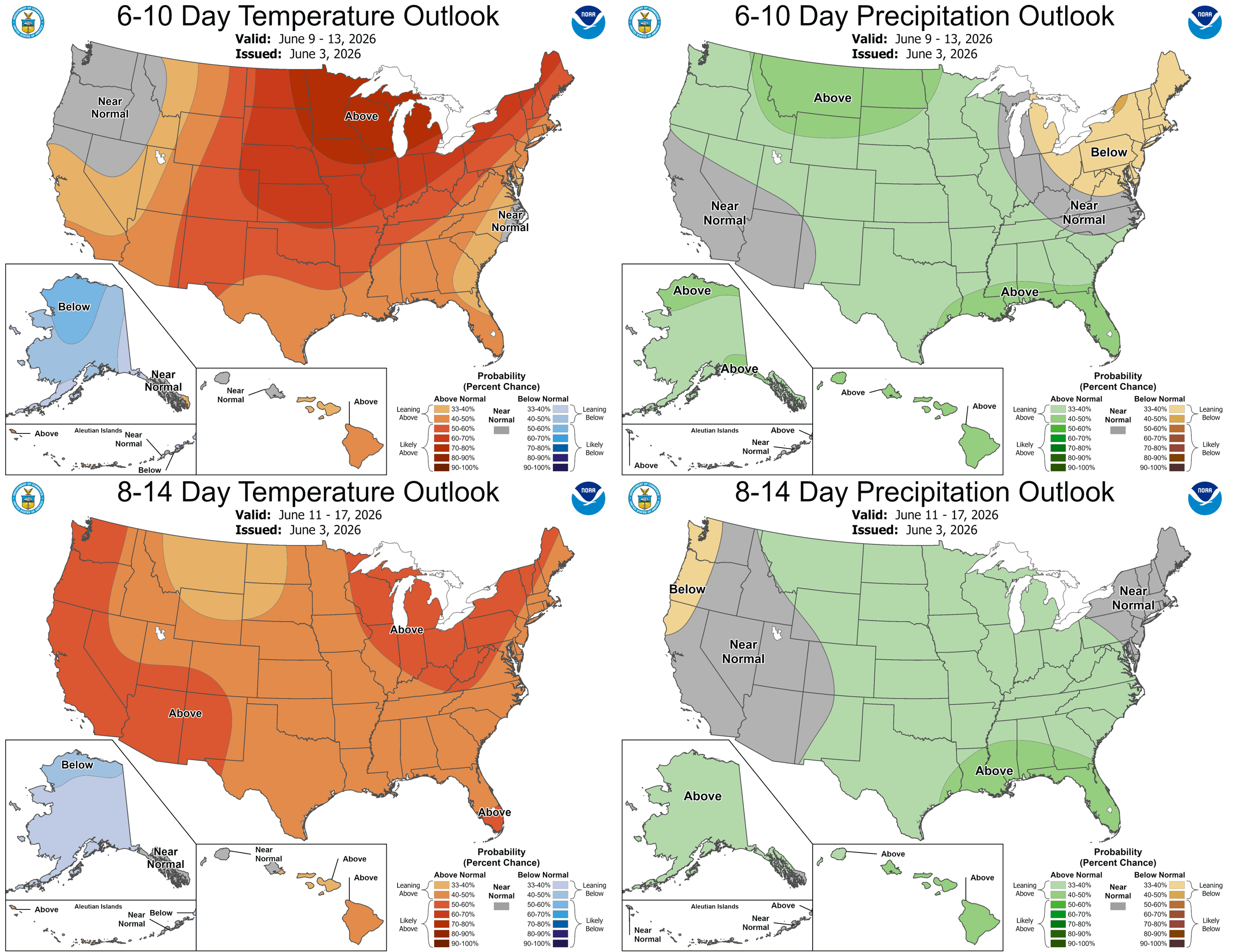
No precipitation fell over the past week, and temperatures were warm but not too hot. Overall, it was a good week for field work, although some emerged crops are showing symptoms of drought stress. Rain is expected over the next 24 to 48 hours and again early next week. As the wind shifts, pests from farther south that travel on air currents (such as leafhoppers and aphids) may make their way up to Michigan.
Crops and pests
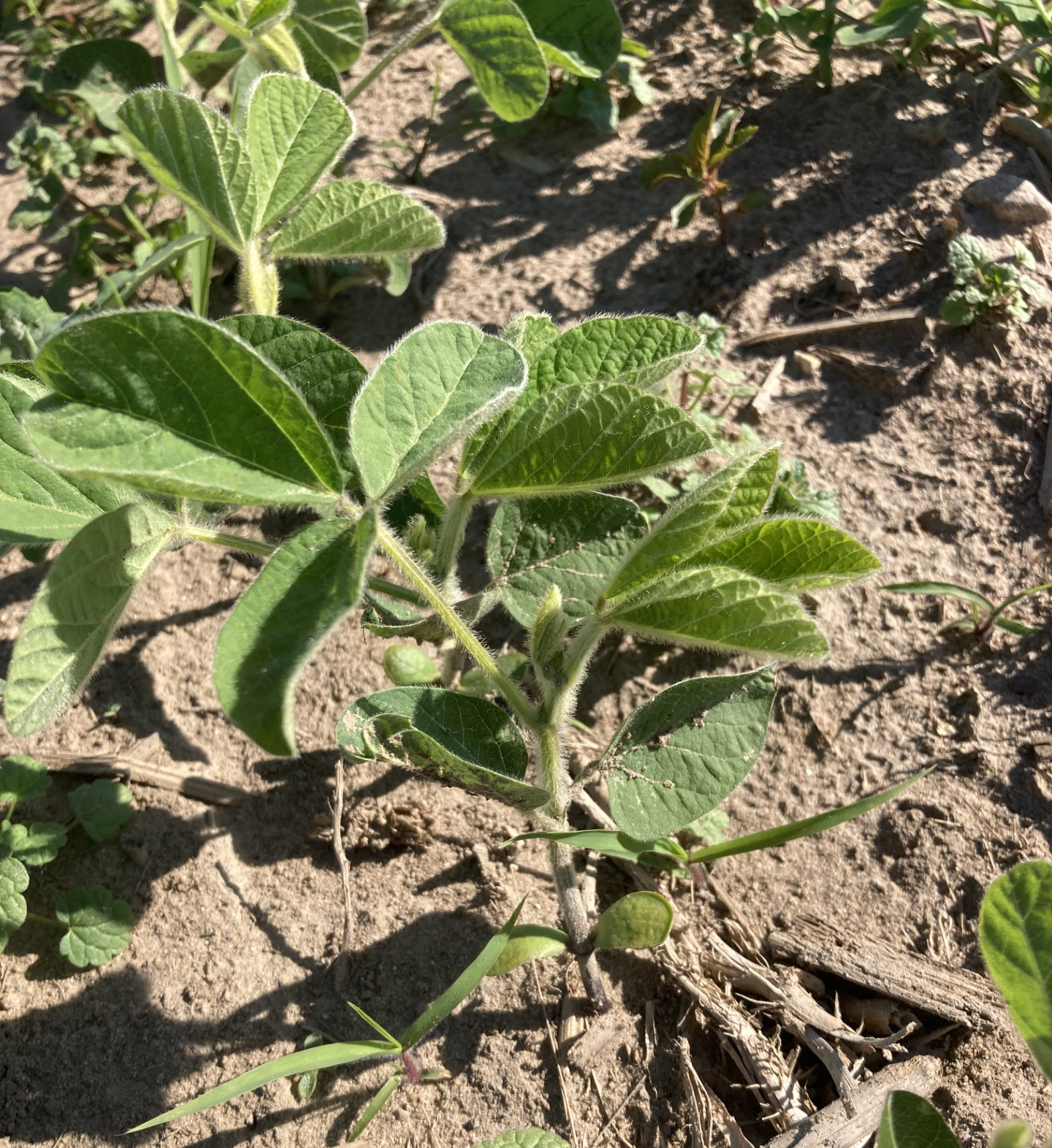
Corn and soybean planting is wrapping up. At this point, most fields have at least emerged. Flaming of male rows in seed corn occurred over the past week. For tips and tricks on distinguishing seed corn from commercial corn, check out the article “Drive-by crop identification in southwest Michigan.”
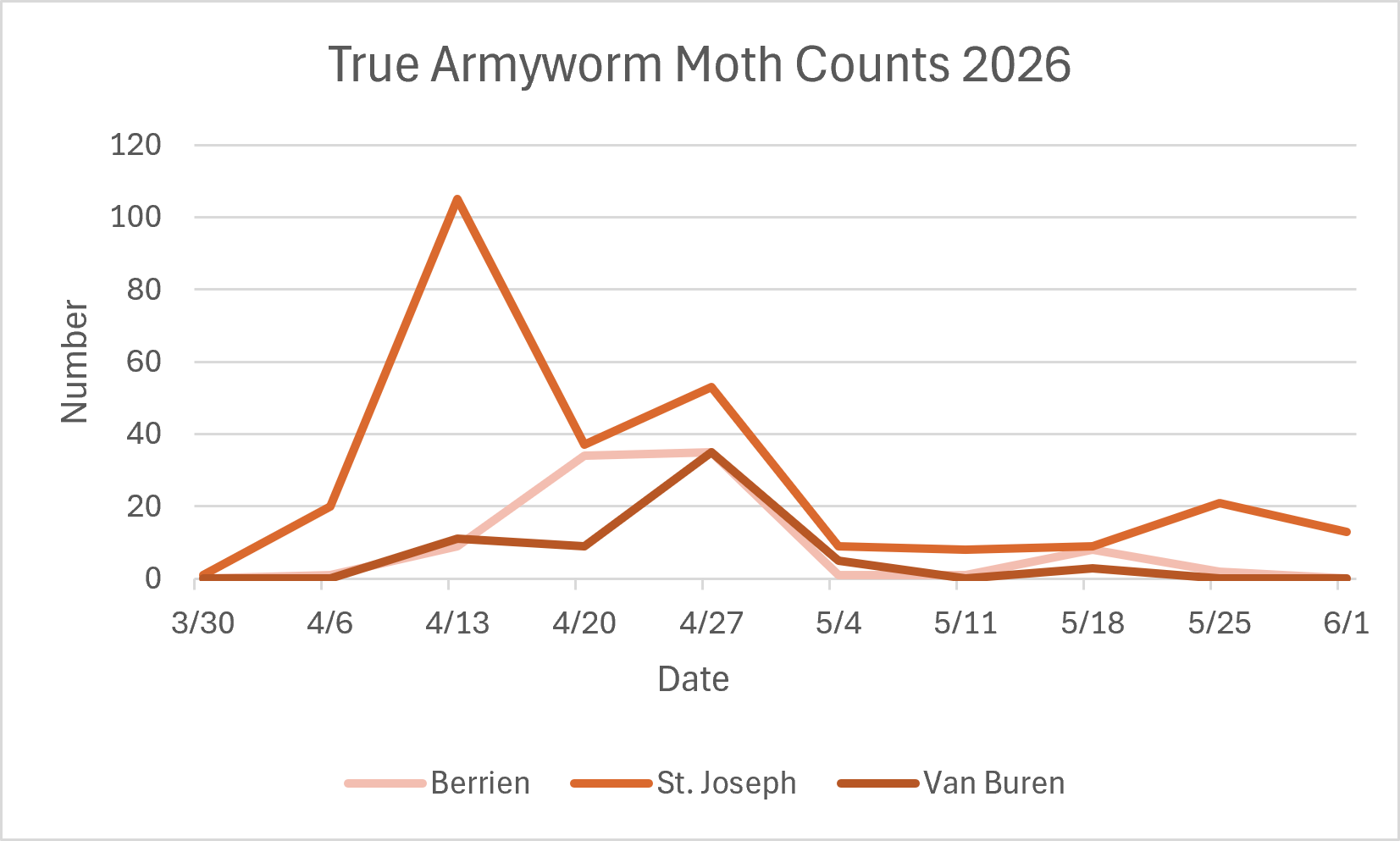
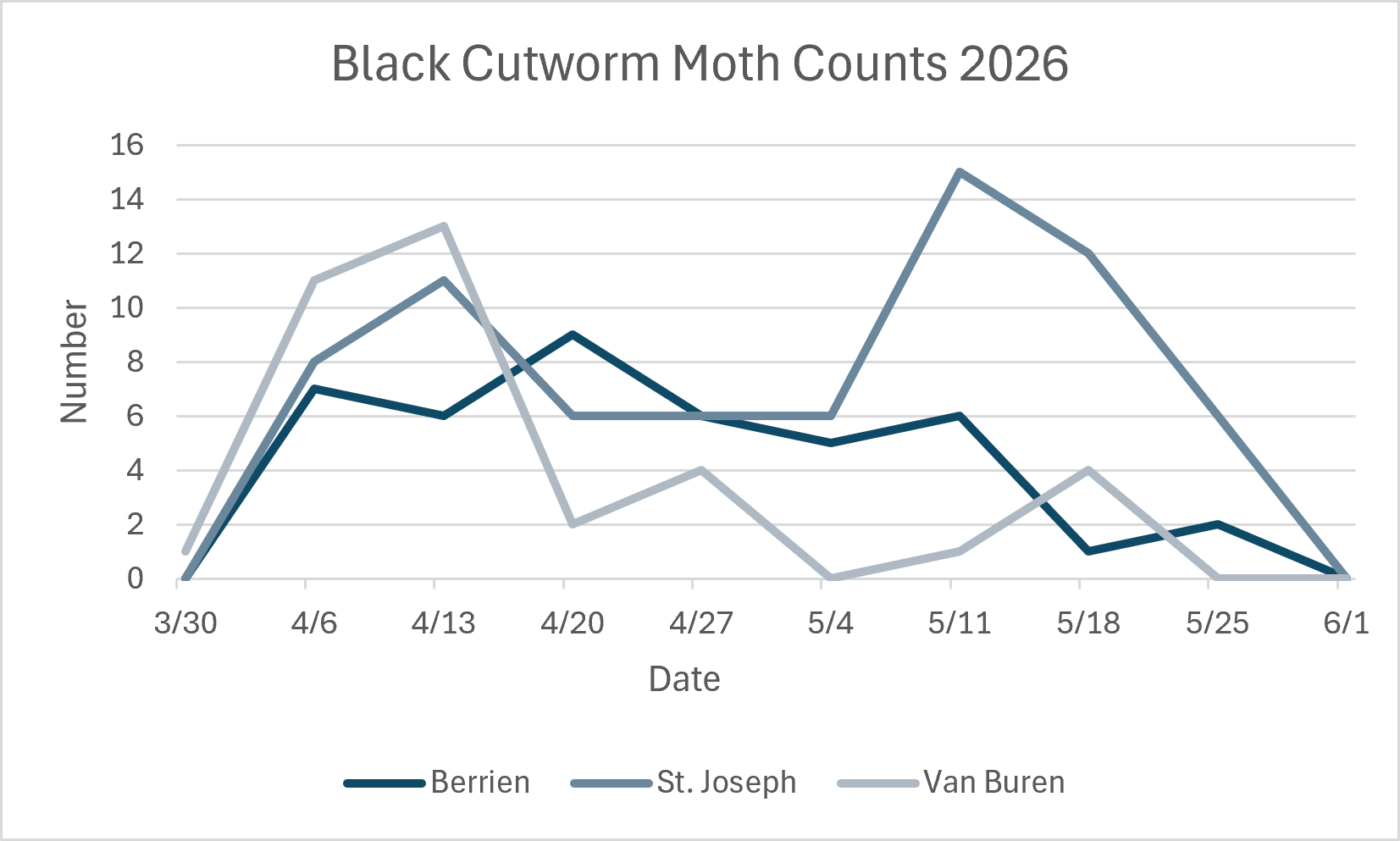
This year, adult moth counts peaked early in St. Joseph County and then remained for several weeks. Moth counts were collected from bucket traps in Berrien (near Berrien Springs), St. Joseph (Centreville) and Van Buren (Lawrence) counties have caught the following:
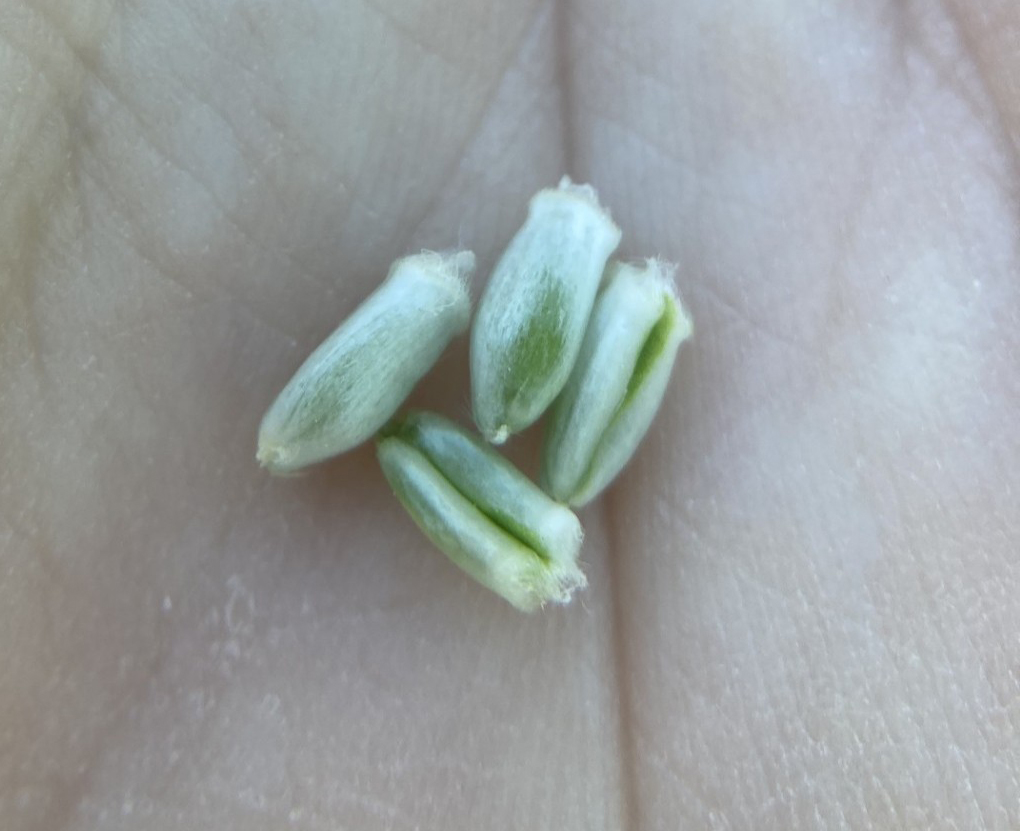
Winter wheat is mainly at Feekes 10.5.4 (kernel watery ripe) and moving into Feekes 11.1 (kernel milky ripe). Some true armyworm (TAW) larvae are in wheat fields. The threshold for TAW after heading is 2 or more larvae per square foot. If heads are being clipped, action is recommended. In most cases, TAW populations are below threshold. Stripe rust was confirmed in the Thumb over the past week.
Flowers are beginning to open on early-planted potatoes. Most potatoes are still at tuber initiation, while a few fields emerged only recently. Potato leafhopper (PLH) is a concern in both potatoes and alfalfa this time of year. PLH is an especially difficult pest because visible symptoms (referred to as hopperburn) don’t appear until after it is too late to correct them.
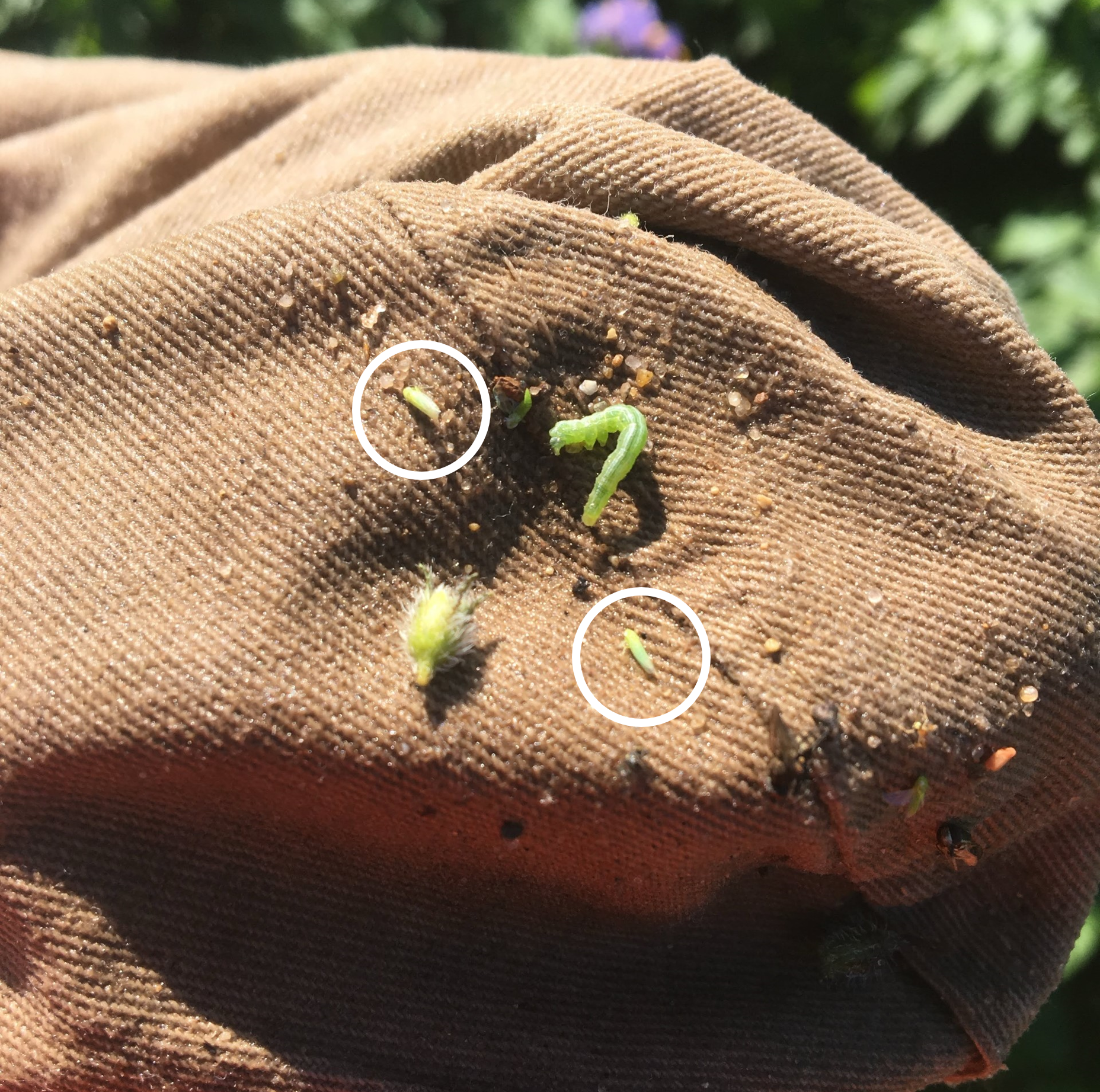
Alfalfa and forage cutting and baling continued, with great progress made during the dry week we had. As fields start to regrow, keep an eye out for PLH and a reoccurrence of earlier pests from this season, such as alfalfa weevil. Some growers have reported TAW in alfalfa.
Irrigation and water use
Early corn and soybean crops are currently using approximately 0.14 to 0.50 inches of water per week, depending on crop growth stage, weather conditions, and location. Potato water demand remains substantially higher, with early vegetative potatoes using approximately 0.7 inches of water per week and potatoes in the tuberization stage requiring up to 1.4 inches per week.
Rainfall is forecast across much of the region this week; however, amounts are expected to vary, and some locations may not receive enough precipitation to fully meet crop water needs. Producers are encouraged to monitor rainfall in their fields using rain gauges and to regularly assess soil moisture within the crop root zone. Irrigation decisions should be based on both recent rainfall and available soil moisture to ensure adequate water is available for crop growth while avoiding unnecessary irrigation applications.
This year, weekly crop water use updates will continue to be shared through the Southwest Michigan Crop Updates, and for added convenience, updates will also be sent through direct email and text messages. Sign up here. If you would like to see an additional location included in the report, please contact Angie Gradiz at gradizme@msu.edu or 531-249-4956.
Estimated weekly crop water use for field crops in Michigan (inches/week) for the week of June 1-7, 2026:
|
Crop |
Growth stage |
Constantine |
Berrien Springs |
Entrican |
Hart |
|
Reference ET |
1.36 |
1.41 |
1.36 |
1.38 |
|
|
Corn |
V2 |
0.14 |
0.14 |
0.14 |
0.14 |
|
V4 |
0.24 |
0.25 |
0.24 |
0.25 |
|
|
Soybeans |
VC |
0.14 |
0.14 |
0.14 |
0.14 |
|
V1 |
0.27 |
0.28 |
0.27 |
0.28 |
|
|
V2 |
0.54 |
0.56 |
0.54 |
0.55 |
|
|
Potato |
Early vegetation |
0.68 |
0.71 |
0.68 |
0.69 |
|
Tuberization |
1.36 |
1.41 |
1.36 |
1.38 |
Field Crops Virtual Breakfast Series

IPM in Sugar Beets, presented by Jaime Willbur, was the topic for the MSU Extension Field Crops Virtual Breakfast this week. Sugarbeet varieties with genetic resistance to cercospora have different lesions than typical cercospora lesions. Most notably, lesions are larger and less well-defined, making it more difficult to distinguish cercospora from other foliar diseases.
Recordings of this and all the Virtual Breakfast meetings are closed-captioned and available at the Field Crops Virtual Breakfast webpage and the MSU Extension Field Crops Team social media platforms: Facebook, Spotify, Mediaspace, YouTube, Apple Podcasts and Twitter/X.
This work is supported by the Crop Protection and Pest Management Program [grant no 2024-70006-43569] from the USDA National Institute of Food and Agriculture. Any opinions, findings, conclusions, or recommendations expressed in this publication are those of the author(s) and do not necessarily reflect the view of the U.S. Department of Agriculture.