


Announcement of Final Thesis Defense Plant Pathology Ph.D. Degree
May 4, 2026 1:30PM - 2:30PM
Announcement of Final Thesis Defense
Plant Pathology
Ph.D. Degree
Candidate’s Name: Judson Van Wyk 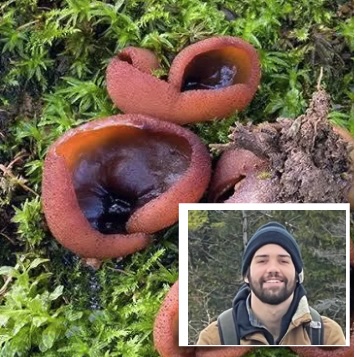
Date: May 4, 2026
Time: 1:30 pm in PSSB A271
Zoom: contact Lauren Andring
Multi-omics Insights into the Development, Ecology, and Evolution of Pezizales Fungi
Members of the Examining Committee and their Department:
Dr. Gregory Bonito - Plant, Soil and Microbial Sciences
Dr. Martin Chilvers- Plant, Soil and Microbial Sciences
Dr. Kevin Childs – Plant Biology
Dr. Kevin Liu – Computer Science and Engineering
ABSTRACT
Pezizales, the fungal order that comprises morels, truffles, and many cup fungi, is an ecologically and morphologically diverse order of Ascomycetes. Although Pezizales have been extensively studied taxonomically, fundamental aspects of their biology remain poorly understood. This dissertation addresses gaps in knowledge regarding development and microbial interactions through the use of developmental transcriptomics, microbiome metabarcoding and metagenomic analyses.
Reproductive strategies and conserved regulatory genes controlling development are well characterized in model systems such as Neurospora, Sordaria, Aspergillus, and Fusarium;however, in many non-model Ascomycetes these processes remain poorly characterized. In Ascomycetes, mating type genes (MAT 1-1-1, 1-2-1) are key regulators of ascocarp (fruiting-body) development. In my first chapter, I assembled the genome of a commercially productive Morchella rufobrunnea single-spore isolate and observed both MAT genes co-localized within the genome, confirming homothallic (self-fertile) reproduction in the species. I then utilized transcriptomic data from 6 different tissue types spanning the life cycle to characterize gene expression patterns throughout development, including conserved regulatory genes of Ascomycetes, transcription factors, genes involved in cell wall restructuring, and other poorly characterized genes.
MAT gene expression was expectedly high in mature fruiting bodies; however, these genes were expressed order of magnitude higher in conidia. In many Ascomycetes, conidia serve as asexual propagules, though roles as fertilizing propagules/spermatia, initiating the sexual development cascade have also been described. The latter is the hypothesized role of conidia in Pezizales, although it has not been extensively investigated using modern methods. The high expression of these important genes, as well as others, in conidia supports this hypothesis, and suggests that they may represent an essential step in initiating fruiting body development. These results, along with many other reported trends, provide new insights into the developmental transitions of a homothallic species of Morchella.
While host-associated microbiomes are known to play essential roles in many organisms, these interactions remain poorly characterized in fungi, including Pezizales. In the final two chapters, I investigate bacterial communities associated with Pezizales fruiting bodies across a broad taxonomic and ecological range to establish a baseline understanding for the order, as well as the factors leading to their assembly. Amplicon-based profiling of 611 fruiting bodies revealed that microbiome composition is structured by host genus, while host traits such as trophic mode and fruiting body form significantly predict some dominant bacterial taxa. Several bacterial genera, including Pedobacter, Bradyrhizobium, and Acidovorax, previously been described in association with Morchella, Tuber, and Helvella and Scutelliniarespectively, were found to form to form more consistent associations across Pezizales, including enrichment in specific ecological groups.
Genomic characterization of fungal-associated bacteria is limited. To further resolve the taxonomic and functional potential of Pezizales-bacterial associates, fruiting body metagenomes were used to reconstruct metagenome-assembled genomes (MAGs). In total, 446 bacterial MAGs were assembled from 148 host derived metagenomes, including genomes representing dominant taxa characterized in the previous chapter.
A high-quality MAG subset (≥90% completeness, ≤5% contamination) revealed that functional potential is strongly associated with bacterial taxonomy, while host-related factors indirectly influence functional profiles through their effects on community composition. In addition, several genomes represent novel lineages within known bacterial genera, highlighting previously undescribed diversity and suggesting they may fungal-associated bacterial clades.
Together, this work establishes a framework for understanding development and bacterial associations within Pezizales and provides a foundation for experimental studies aimed at validating developmental mechanisms, functional contribution of microbiomes, and the intersection of the two.


 Print
Print Email
Email