


Fruit Pest and Beneficial Search
Help us improve this search tool by leaving feedback in this short survey
Use this search to identify diseases, insect and mite pests and beneficials, a critical step in any integrated pest management (IPM) plan. This search covers tree fruit and grape pests and is based on the publications “Tree Fruit Field Guide to Insect, Mite, and Disease Pests and Natural Enemies of Eastern North America” and “A Pocket Guide for Grape IPM Scouting in the North Central and Eastern United States.”
-
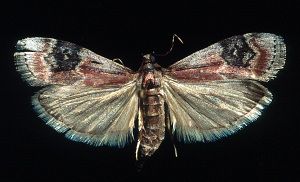
American plum borer
Insect
The adult is a light grayish brown moth with reddish brown forewings marked by wavy black and brown vertical bands about two-thirds the distance from the base.
-
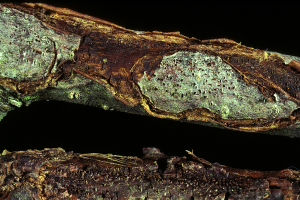
Apple anthracnose
Disease
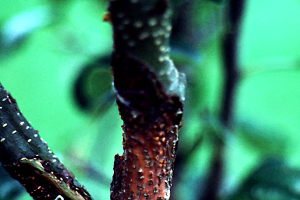
Branch lesions first appear as small, circular spots that are purple or red when wet. As lesions enlarge, they become elliptical, sunken and turn orange to brown. A distinct margin develops between healthy and diseased tissue, which eventually causes the bark to crack around the infected area.
-
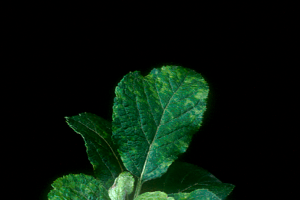
Apple latent viruses
Disease
Latent viruses are viruses that survive in their host without causing symptoms. These viruses are transmitted when a virus-infected scion is grafted onto a susceptible rootstock.
-
Bacterial canker (blossom blast)
Disease
Leaf scars, stomata, and areas of injury are the principal sites of infection. The most conspicuous symptoms are limb and trunk cankers, blossom blast, "dead bud", and leaf spotting; these symptoms may or may not occur together.
-
Black knot
Disease
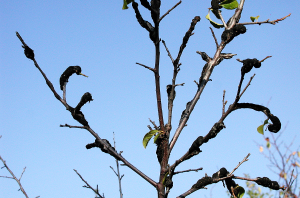
Black knot usually develops over two seasons. The disease first appears in late summer or autumn as an olive-green swelling on new shoots. Disease develops rapidly the following summer, forming a characteristic dark, course-textured warty knot.
-
Black rot (Blossom end rot, Frogeye leaf spot)
Disease
Fruit infections that occur early in the season appear at the calyx end and typically develop into blossom end rot that may not appear until the fruit begin to mature.
-
Buffalo treehopper
Insect
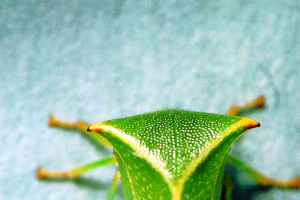
The pale green adult exhibits a large thorax with two "horns" and a long posterior wedge-shaped body. The cream-colored eggs are laid in a groove on the tree bark, where they overwinter.
-
Dogwood borer
Insect
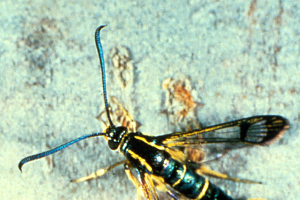
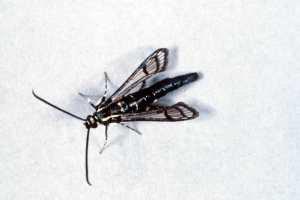
The adult is bluish black with yellow bands and has clear wings, resembling a wasp. Larva is creamy white to pink with a sclerotized reddish head.
-
Flatheaded appletree borer
Insect
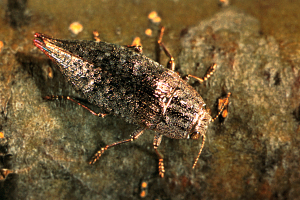
The adult is a short-horned beetle, flattened above, with short antennae and large conspicuous eyes. The upper surface of the body is dark metallic brown with slightly patterned wing covers.
-
Lesser peachtree borer
Insect
Adult is a clear-winged, metallic-blue moth that has two or more yellow bands across the abdomen, giving it a wasp-like appearance.
-
Nectria canker
Disease
Cankers are often associated with nodes, often appearing as elliptical sunken areas. Sometimes callus production stops fungal invasion and cankers die by season's end.
-
Peach bark beetle
Insect
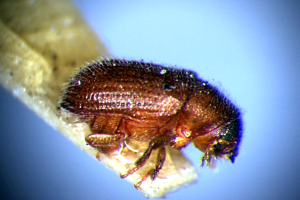
Adult's body is brown with many punctures, from which arise yellowish hairs. The larva is a small, legless grub.
-
Peach tree short life (PTSL)
Disease
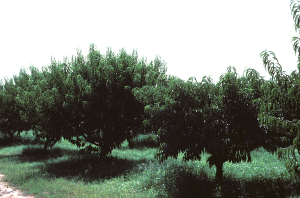
Trees in their third to sixth year show a sudden wilt and collapse of new blossoms and death of branches, with tree death following within weeks of initial symptoms. The bark of affected trees appears reddish and water-soaked and gum exuding from these tissues often has a "sour sap" odor.
-
Peachtree borer
Insect
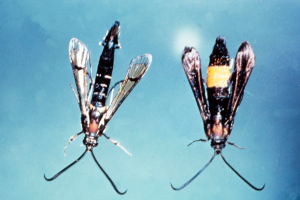
Adult is a clear-winged, metallic-blue moth that has one broad orange or two or more yellow bands across the abdomen; both sexes have more amber sheen on wings than lesser peachtree borer adults.
-
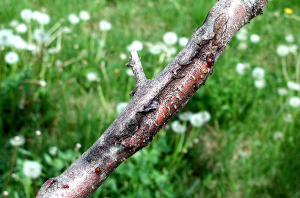
Perennial canker of apple and pear
Disease
Branch lesions are elliptical, sunken, and orange, purple, or brown in color. A raised layer of callus tissue forms around the infected tissue to isolate the diseased tissue.
-
Perennial canker of stone fruit
Disease
Small twig infections are usually found around winter-killed buds, leaf scars, and picking and pruning injuries. They appear as sunken discolored areas with alternating zonation lines and may ooze amber gum unless the twig is killed.
-
Phony peach disease
Disease
The canopy of infected trees is flattened and compacted due to shortening of the internodes; the foliage tends to be a darker green. Infected trees may also flower and set fruit earlier, bear smaller fruit, and may suffer a substantial reduction in yield.
-
Prionus borers
Insect
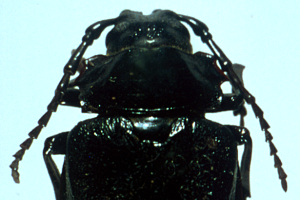
Adults are robust, broad, somewhat flattened blackish to reddish brown beetles with antennae roughly half the length of their bodies.
-
Roundheaded appletree borer
Insect
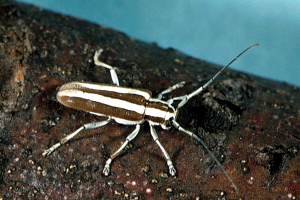
Adult has a hard, elongated body, with white and brown longitudinal stripes and long antennae. The larva is a fleshy, cream-colored legless grub with a dark brown head, blackish mandibles.
-
San Jose scale
Insect
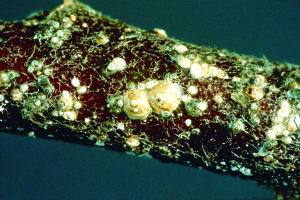
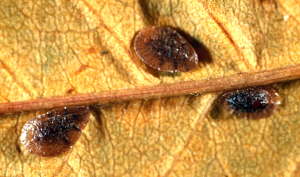
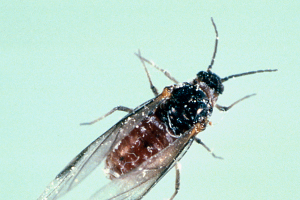
Adult males are minute, winged insects about 1 mm long and golden brown with a reddish tinge. Scales may be either disk-shaped or oval, and are composed of concentric rings of gray-brown wax radiating from a tiny white knob.
-
Shothole borer
Insect
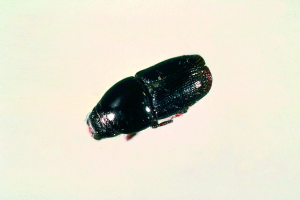
The adult is stocky with a hard black body and antennae, leg segments and tips of elytra reddish brown; its head is not visible from above.
-
Silver leaf
Disease
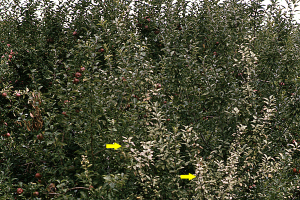
Silvering of the foliage is the characteristic symptom. At first, silvering may be associated with only one or two major branches, but eventually the entire tree becomes silvery in appearance. When infection is severe the leaves may curl upward.
-
Southern blight
Disease
Trees attacked by the fungus show a general decline. In the early phase of disease, a dense mat or web of white mycelium is evident at the base of the tree.
-
Verticillium wilt
Disease
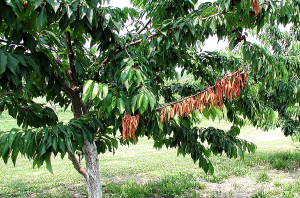
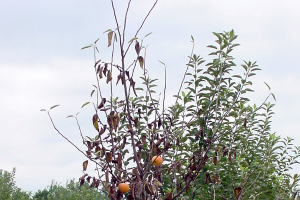
Leaves wilted or browned on one or several branches, often remaining attached; the rest of the tree appears healthy. Young trees are often killed by infection.
-
White peach scale
Insect
Adult female is creamy-white to reddish orange, and covered by a round waxy scale that is grayish to brownish white. Adult males are tiny yellow 2-winged insects, and nymphs are oval and white to orange.
-
White rot
Disease
Fruit lesions become visible 4–6 weeks before harvest, and appear as small, circular, slightly sunken tan to brown spots, sometimes surrounded by a red halo on yellow-skinned fruit.
-
Woolly apple aphid
Insect
The colonies of reddish brown adults and nymphs produce waxy secretions, which resemble small tufts of wool or cotton batting. The aphids are without cornicles, possessing only abdominal pores.


 Print
Print Email
Email