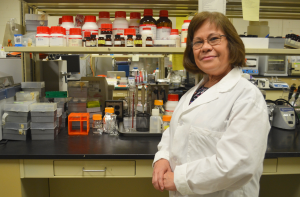
Evangelyn Alocilja - 2013 - TEDMEDLive MSU
 Print
Print Email
EmailVideo Transcript
10 seconds
i'd like to go straight to the topic about biosensors elderly and healthcare so elderly and global health why do we do care20 seconds
well there are four challenges or realities that we need to face in the coming years26 seconds
in this area of global health the elderly the elderly population is increasing34 seconds
and will continue to increase by 2030 there's 1 billion elderly population in the world by 2050 there42 seconds
will be 2 billion people in many developing developed countries there are more elderly now than the 1249 seconds
to 24 year group by 2050 globally there will be more elderly population than the equivalent58 seconds
12 to 20 to 24 years old age group so what's the implication of this the elderly population will continue to1 minute, 6 seconds
be in the workforce they will continue to be independent and most of them living at home1 minute, 16 seconds
they will be at a higher proportion than the 12 to 24 year old workforce1 minute, 24 seconds
or higher workforce higher age workforce but unfortunately we are vulnerable to1 minute, 31 seconds
infections because they have reduced immune system due to aging they have chronic diseases1 minute, 38 seconds
and therefore they need more medical and social services health care costs is continuously rising1 minute, 45 seconds
now and in the future in the united states alone one percent of the health care1 minute, 52 seconds
spenders occupy constitute twenty percent of health care spending and the top one percent2 minutes, 1 second
is two thirds of them are elderly ninety thousand the elderly spend about2 minutes, 8 seconds
ninety thousand dollars per year that's the top one percent whereas the bottom fifty percent spent only two2 minutes, 17 seconds
hundred thirty six dollars per year there's this less access to health care in many parts of the world health care2 minutes, 25 seconds
is a luxury there are more people who are on the periphery of2 minutes, 32 seconds
medical care that could lead to deaths and disabilities which could have been prevented because they don't have access to health2 minutes, 41 seconds
care then there's the limited resources there's just not enough money to build hospitals and hospital beds around the2 minutes, 49 seconds
world and what's happening there will be more people cram in small spaces2 minutes, 56 seconds
and there will be there are less professional medical professionals than patients in terms of ratio this kind of conditions can transmit3 minutes, 4 seconds
diseases and sanitation can be compromised there are three real world problems or examples that i would present this3 minutes, 12 seconds
afternoon tuberculosis diarrhea and malaria the combined3 minutes, 20 seconds
fatality from these three diseases are millions of people tuberculosis kills 1.7 million people3 minutes, 28 seconds
every year that translates to three deaths per minute so as we speak there are people dying of3 minutes, 36 seconds
tuberculosis and before i end my presentation there will be about 60 people who will be dead from tuberculosis3 minutes, 44 seconds
there's two billion people infected throughout the world nine million cases every year3 minutes, 51 seconds
and this disease is highly infectious research shows that an inf that an infected person3 minutes, 59 seconds
infects six others before that person gets treatment and this disease orphans 10 million children a year4 minutes, 8 seconds
tb and hiv is a bad combination it's a fatal combination4 minutes, 15 seconds
and then you couple it with drug resistant tb body related drug resistant extensively drug resistant and totally drug4 minutes, 24 seconds
resistant tb is treated six to nine months the regular tb the ordinary tv4 minutes, 32 seconds
drug resistant tv moderately drug resistant tv takes two years to treat the extensively drug resistant tb takes4 minutes, 41 seconds
more years and more therapy what's the implication it becomes expensive and draining to the patient4 minutes, 49 seconds
and to the caregiver the diarrhea studio cholera e coli salmonella4 minutes, 56 seconds
norovirus rotavirus whatever you name it throw food contaminated food and water the combination of this5 minutes, 6 seconds
the young and the elderly are at risk there's about 2.6 million deaths in 20095 minutes, 13 seconds
from the combination just of diarrhea 1.5 are children aged below 55 minutes, 20 seconds
and 1.1 million are older then we have malaria malaria is caused by plasmidium falciparum5 minutes, 27 seconds
and it's transmitted through mosquitoes mosquito bites in this area it is based on the tropical and subtropical regions and there's5 minutes, 36 seconds
about 3.3 billion at risk of malaria5 minutes, 43 seconds
so i invite you to the world of tricorders you know the star trek5 minutes, 50 seconds
movie this tricorder this is a replica of a tricorder it's it's used to scan5 minutes, 57 seconds
diseases in the star trek they scan this and you will see all the information about the6 minutes, 4 seconds
patient disease status severity blood analysis and so on data analytics is in there data6 minutes, 12 seconds
transmission is in there everything is in there so this kind of world is not actually6 minutes, 19 seconds
very far from reality i welcome you to the world of biosensors6 minutes, 27 seconds
the one on the left is our biosensor that we're developing in the lab the one on the right is your typical glucose6 minutes, 35 seconds
meter a glucose meter is a successful biosensor in the market what does it do it's small6 minutes, 43 seconds
you're able to you're empowered to screen yourself it is inexpensive6 minutes, 50 seconds
simple to use and you can put it in your pocket so biosensors are designed to be rapid inexpensive6 minutes, 59 seconds
simple and early how rapid we're talking about minutes or seconds for a biosensor7 minutes, 7 seconds
where the traditional method is for about three three days or weeks how inexpensive7 minutes, 14 seconds
biosensors we're talking about pennies or less than a dollar at least current diagnosis 35 1007 minutes, 23 seconds
sometimes there are like two thousand dollars simple you and i can use it anywhere anytime7 minutes, 33 seconds
whereas the current diagnosis you have to send it to the lab with specialized personnel because it is rapid7 minutes, 41 seconds
inexpensive and simple you can actually use it for early detection early screening7 minutes, 48 seconds
and frequent screening in our lab we look at nanobiosensors nanobeing we use nanomaterials7 minutes, 57 seconds
nanotechnology nanoparticles as our transducers for making these small devices8 minutes, 4 seconds
we use it for pathogen detection as well as biomarker discovery so what is our hope8 minutes, 13 seconds
that through early rapid inexpensive simple and early detection of these diseases8 minutes, 21 seconds
we can say goodbye to tuberculosis goodbye to diarrhea and eventually good say goodbye to8 minutes, 28 seconds
malaria our hearts desire in our lab and in our research is to eventually have our elderly8 minutes, 37 seconds
healthy happy and a right place in society that's my take for this i want you to8 minutes, 45 seconds
take this message for this afternoon thank you and thanks for you listening8 minutes, 50 seconds
[Applause]8 minutes, 54 seconds
you