


Resources
-
Michigan Turtles and Lizards
Published on October 27, 2015
TODO -
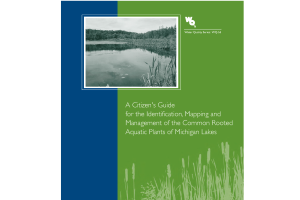
Guide for the Identification, Mapping and Management of Aquatic Plants of Michigan (WQ55)
Published on October 27, 2015
A Citizen's Guide for the Identification, Mapping and Management of the Common Rooted Aquatic Plants of Michigan Lakes -
Managing Game Birds
Published on October 26, 2015
The wild game bird population in Michigan declined seriously during the 1950s and ?60s. Pheasants used to be abundant in the lower half of the Lower Peninsula. -
Adaptive Management
Published on October 23, 2015
Many of the management practices that are already "smart forestry" can have valuable win-win benefits for climate change adaptation. -
Adaption Strategies and Approaches
Published on October 23, 2015
Foresters and forest owners will respond to climate change in different ways, based on their judgment of the associated risks and opportunities. A range of adaptation actions can be taken, which can be selected based on management objectives. -
How the Climate Affects Forests
Published on October 23, 2015
Forests are affected by the local climate, in addition to being affected by short-term weather events. Michigan's climate has been changing over several decades, and continued climate change could result in many impacts to forests in our state. -
Biodiversity Services and Bioenergy Landscapes
Published on October 21, 2015
Growing bioenergy crops will transform agricultural landscapes and affect the services they deliver. -
Water Withdrawals and Water Use in Michigan (WQ62)
Published on October 20, 2015
Maintaining accurate information about the amount of water used in Michigan and the purposes of its use is important for effective water resource management. -
Farming Captive Cervids in Michigan (WO1026)
Published on October 20, 2015
Deer and elk belong to the taxonomic group of animals called the family Cervidae. -
Forest Adaption Glossary
Published on October 19, 2015
New terms are used in the discussions of climate change and forest adaptation. Having a working vocabulary helps to better understand many of the concepts and how they relate to each other.


 Print
Print Email
Email