Evergreens (fir, pine, spruce, etc.)
 Print
Print Email
Email
Whole Tree and Surroundings
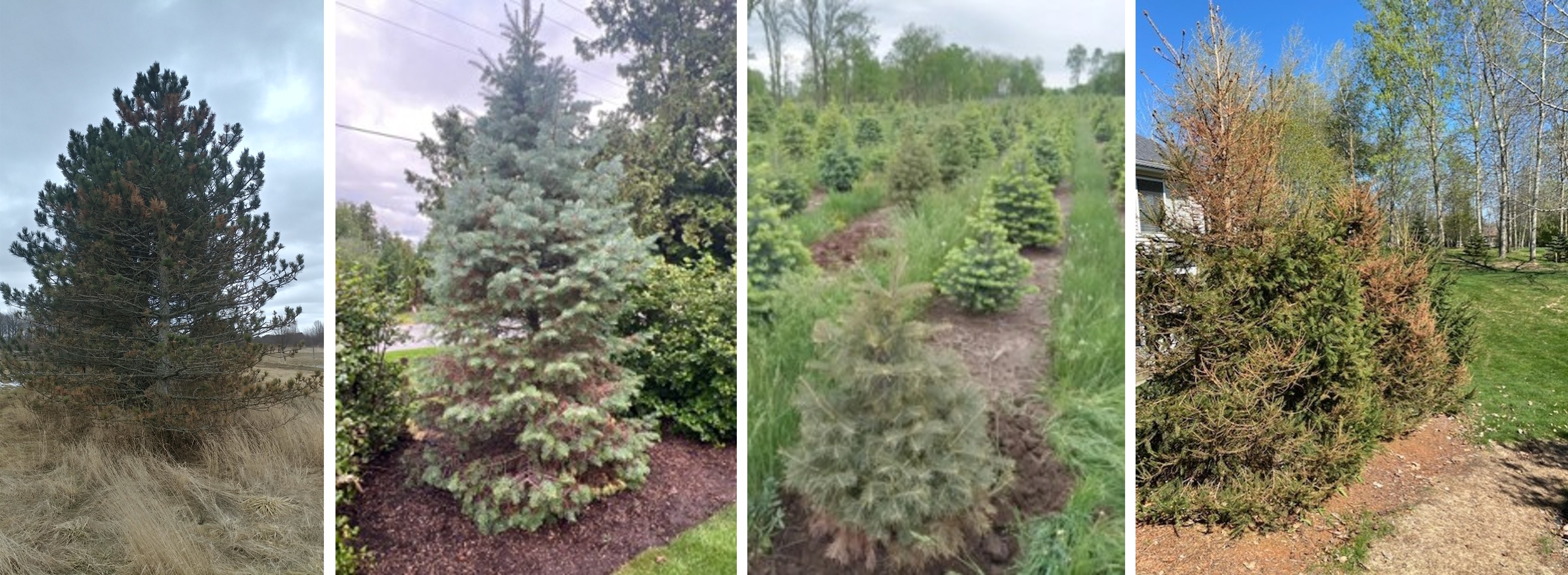
Whole‑tree photos provide important context for diagnosing evergreen health issues. These images show the tree’s overall size, shape, and growth pattern, as well as how symptoms are distributed throughout the canopy. They also help diagnosticians assess environmental factors—such as nearby structures, surrounding plants, soil conditions, or sun exposure—that may be contributing to the problem.
When taking these photos, step back far enough so the entire tree fits clearly in the frame.
Canopy
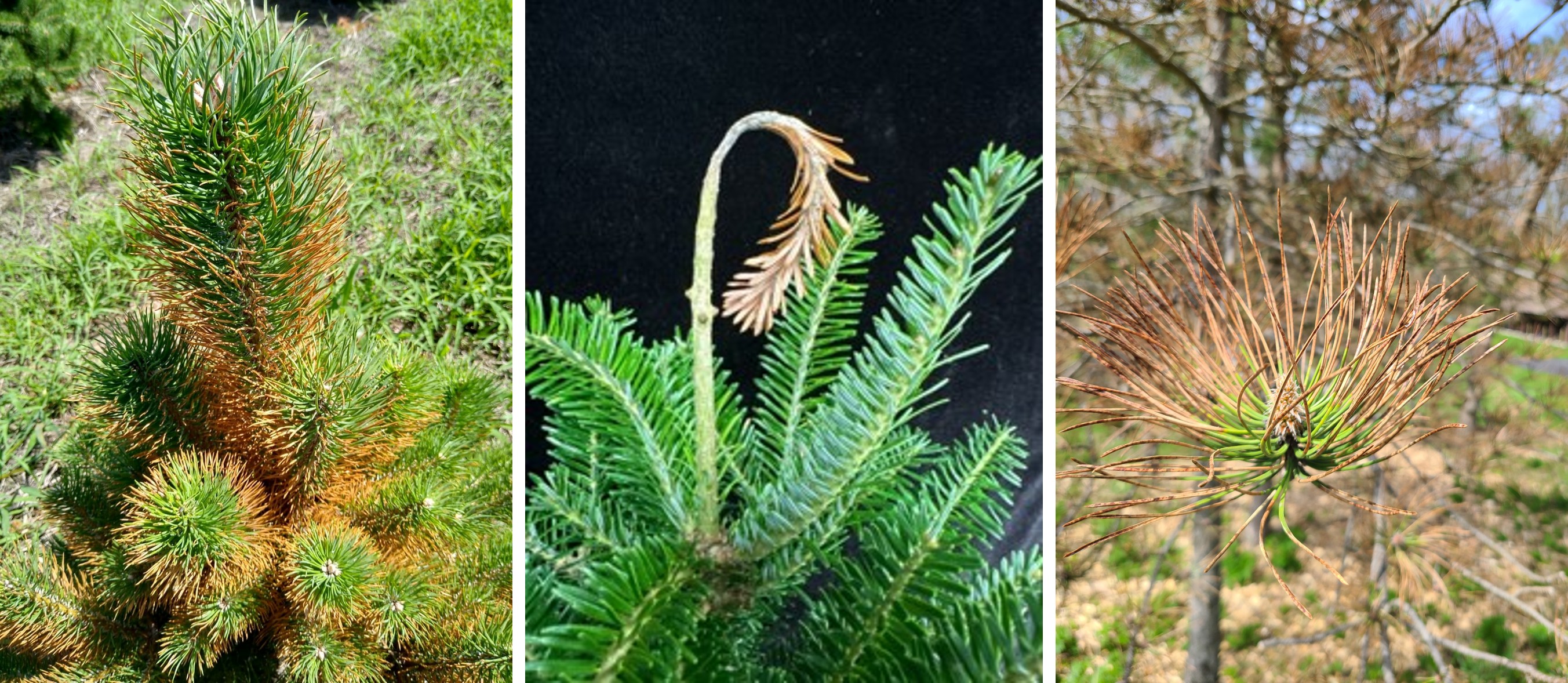
After capturing full images of the tree, move closer and take photos of specific areas within the canopy that look unusual or concerning. Focus on sections showing discoloration, thinning needles, dead branch tips, dieback, or any areas that look different from the rest of the tree.
These closer canopy images help diagnosticians identify symptom patterns and determine where the issue may be starting or spreading. Clear, well‑focused photos of problem areas often reveal details that may not be visible in wide, whole‑tree shots.

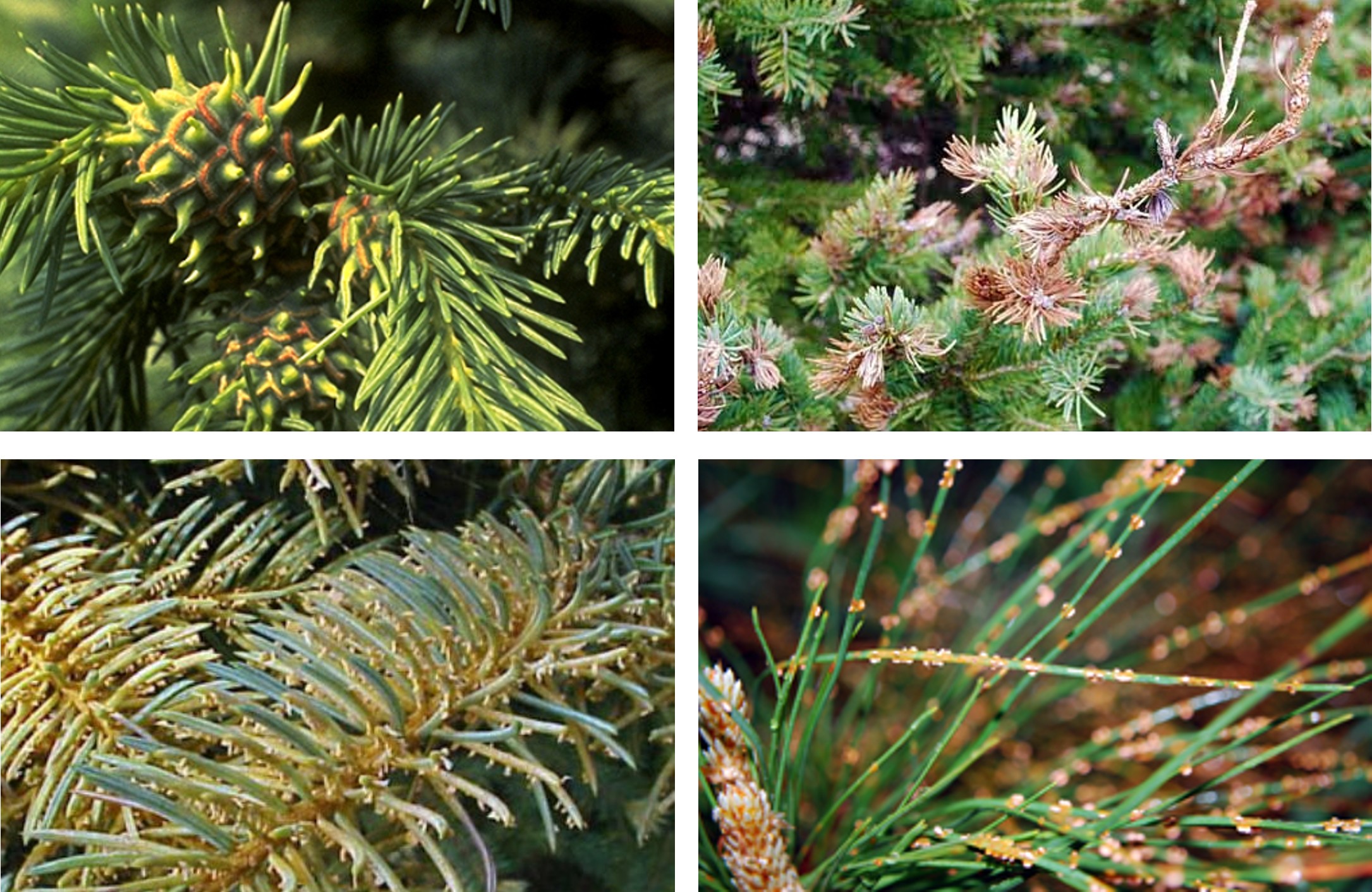
Close-ups images
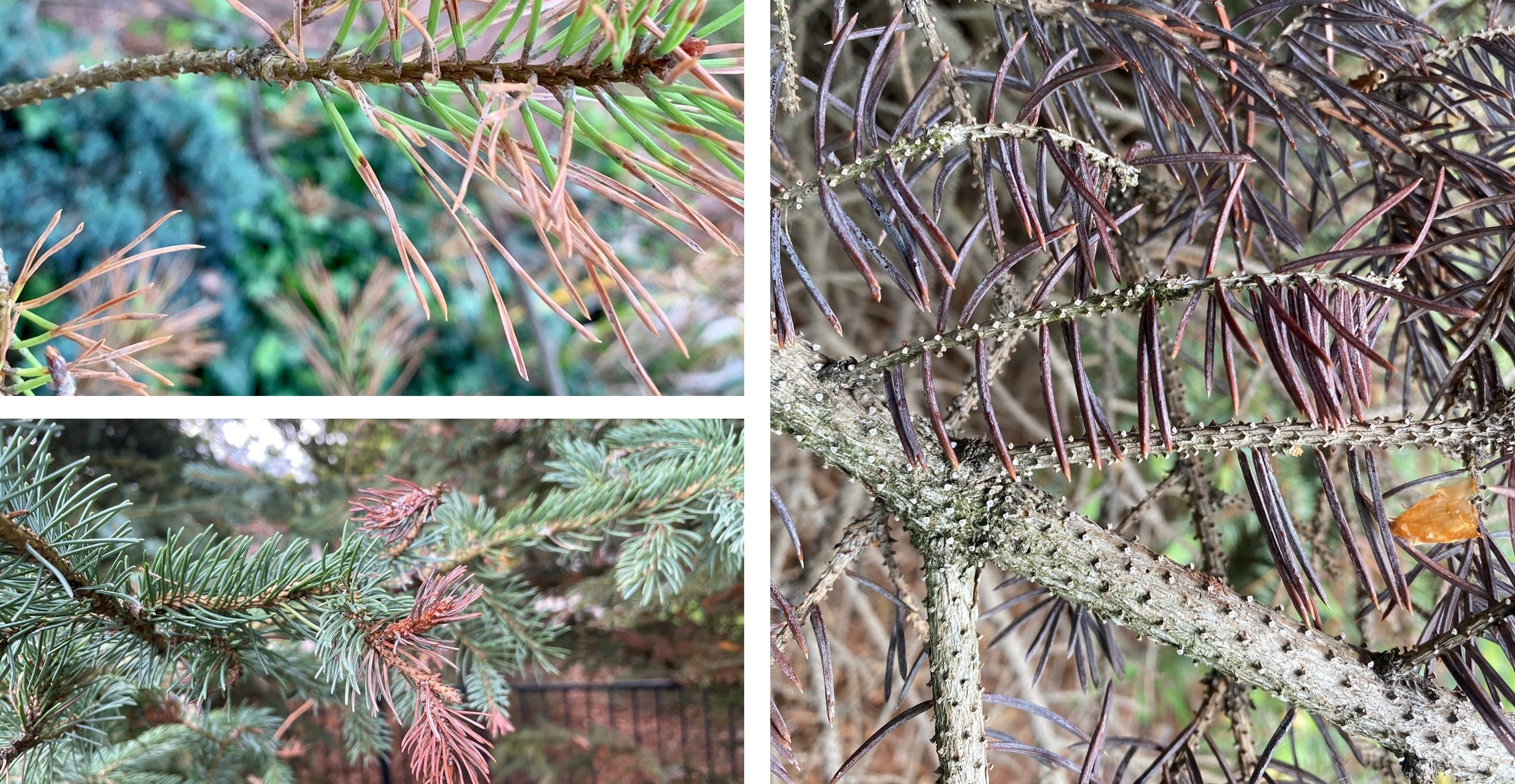
Close-ups allow diagnosticians to see fine details that are essential for an accurate diagnosis.
Trunk / Base of Tree
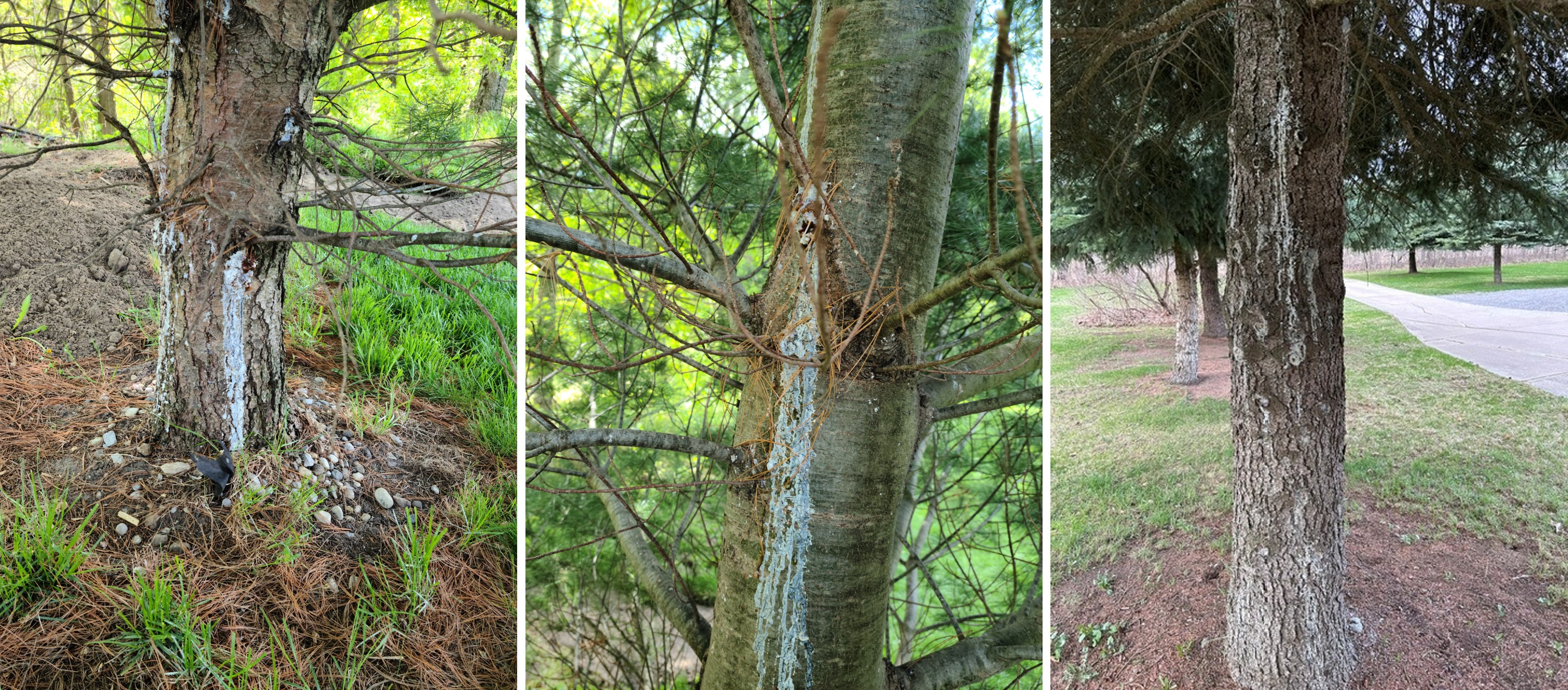
Photos of the trunk and base of the tree often provide critical diagnostic clues and should always be included. Be sure to capture clear images of:
- Sap or resin flow, including wet, sticky, or hardened pitch areas
- Cankers, such as sunken spots, cracks, or seams in the bark
- Wounds or injuries, including mechanical damage, insect holes, or areas where bark is missing
These details can help distinguish between environmental stress, insect activity, and disease.
Cankers and Galls
Photos of unique or unusual symptoms—such as cankers, galls, swellings, or abnormal growth patterns—are especially valuable for diagnostics. Close‑up images of these features help highlight key characteristics that may not be visible from a distance and can significantly improve diagnostic accuracy.
If you notice anything on your tree that looks out of the ordinary, take several clear, close‑up photos and include them with your submission. These images can play an important role in getting the most helpful and timely diagnostic guidance.