Forestry Graduate Student Spotlight - Esther Tonade
 Print
Print Email
EmailMaster’s student, Esther Tonade, studies Urban and Community Forestry, using research, data analysis, and community partnerships to help build greener, fairer cities for everyone.

Name: Esther Tonade
Hometown:Abeokuta, Nigeria
Degree working on: Master’s
Research focus: Urban and community forestry
Can you tell me about yourself and what brought you to study forestry at MSU?
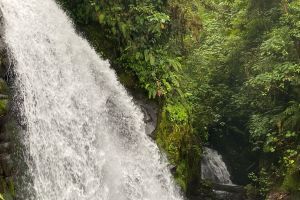
I am originally from Nigeria, and my connection to nature started with a Terminalia catappa tree in our backyard that I loved mostly because of its fruits. Losing that tree unexpectedly was painful, but it quietly planted a seed in me about how deeply trees shape our lives. Later, visiting Africa's highest waterfall deepened my awe for the environment and made me more curious about how people and nature can thrive together. Those experiences, combined with a passion for working with communities, led me to urban forestry and eventually to MSU, where I'm now a master's student eager to use research, data analysis, and community partnerships to build greener, fairer cities for everyone.
What has been one of your best experiences within graduate school so far?
One of my most memorable experiences has been discovering the incredible resources available to graduate students at MSU, from the vast library collections and data analysis tools to funding opportunities and workshops that help us thrive. What stands out even more is the warm, approachable relationships between faculty and students; professors are always open to office hours, research collaboration, and genuine mentorship. I've loved connecting with people from all walks of life, international students, local community organizers, researchers from diverse disciplines, and learning new perspectives, even unlearning old assumptions about forestry, all while building a global network that makes this journey feel both supported and exciting.
What advice would you give to other students who might be curious about studying forestry, but aren’t sure they would feel represented?
I would tell them that feeling unsure about belonging is completely understandable, but it doesn’t mean they don’t belong; it often means their perspective is exactly what the field is missing. You don’t have to look like the “typical” image of a forester, or come from a traditional background, to have something valuable to offer. Forestry touches cities, villages, and communities like the ones many of us grew up in, and that lived experience is powerful. If you’re curious, start small: take a class, talk to a faculty member, attend a seminar, or join a project and see how it feels. Your questions, your story, and your presence can help shape a field that hasn’t always reflected everyone, and that is precisely why your voice matters.
What kinds of support or representation do you think are important for Black students entering this field?
For Black students entering forestry, seeing Black professors, graduate students, researchers, and professionals in visible roles, whether teaching classes, leading projects, presenting at conferences, or managing urban tree programs, is crucial because it helps us picture ourselves thriving in those same spaces. Equally vital are safe spaces to connect, ask tough questions, share experiences, and build community, whether through informal networks or structured programs; they make a big difference. Ultimately, Black students need to know they are not just being included; we are being prepared, supported, and expected to lead.
What does Black History Month mean for Black communities, and what does it mean to you?
Black History Month feels like opening a family album across generations, spotlighting Black contributions to land, science, culture, and survival that are usually overlooked. For me, it connects my urban forestry work to that legacy of Black land stewardship, pushing me to carry it proudly, stand tall, and make sure the doors I walk through stay open for others.
Have you felt represented in the forestry field? Why or why not?
Representation in forestry feels limited, but it is steadily getting better. There are more Black professors, grad students, researchers, and professionals showing up in classrooms, projects, conferences, and urban tree work than before, which helps paint a clearer picture of success for someone like me.
What are your future plans?
My goal is to become an urban forestry researcher addressing environmental inequity through community-engaged science. By combining data-driven research, mentorship, and community partnership.
Any thoughts or advice for current students?
I would encourage current students to ask for help and to speak up when they don’t understand something. Some of my biggest growth at MSU has come from learning not to be timid in difficult classes and instead asking questions, meeting with instructors, and seeking support. Build relationships with mentors and peers who genuinely want to see you succeed, and don’t underestimate the strength that comes from community. Keep a record of your progress and small wins; it will remind you how far you’ve come when things feel overwhelming. Most importantly, remember that you deserve to be seen, heard, and valued in your program. You belong in the rooms you’ve worked hard to enter, and it’s okay to claim that space with confidence, even when it feels uncomfortable.