Michigan vegetable crop report – May 27, 2026
 Print
Print Email
EmailThe season is in full swing with opportune weather for fieldwork on the way.

Weather
There is a pronounced ridge in the Jetstream called an Omega Block over the Midwest. This will likely bring a prolonged period of low humidity and warm temperatures, with little rainfall. For the past week, rainfall was significant to the south and minimal to the north.
Check out Jeff Andresen’s weekly forecast:
- Fair, dry and warm over most of the state Wednesday, May 27. Scattered late afternoon and evening showers possible to the south. Fair, dry and cooler Thursday into this weekend followed by gradually warmer temperatures early next week.
- High temperatures generally in the low-mid 80s south Wednesday, cooling to the low to mid-70s Thursday through the weekend and then warming to the 70s to low 80s again early next week.
- Low temperatures from the 50s Wednesday cooling to the upper 40s to low 50s Thursday through this weekend.
- Medium range outlooks consistent in calling for drier than normal weather into early June, with near to above normal mean temperatures.
- Updated long lead outlooks for the summer months in Michigan call for equal odds/climatology of both mean temperatures and precipitation totals.
Safe disposal of expired pesticides – Clean Sweep
If you have expired pesticide products that need disposal, visit the nearest Clean Sweep site for safe disposal. Clean Sweep accepts pesticide products free of charge from all Michigan residents. Learn more about the Clean Sweep program.
Crop updates
Asparagus
Growers were back to two picks a day in west central Michigan as warm temperatures accelerated harvest again. Keep an eye out for asparagus beetle during these warm days.
Be aware that you have to download the indemnified label for Dual Magnum, as asparagus is not on the main label. To do this, visit Syngenta’s indemnified labels site, create an account, log in and download the label. Make sure to save it as a PDF so you have it on file for future years.
Root crops
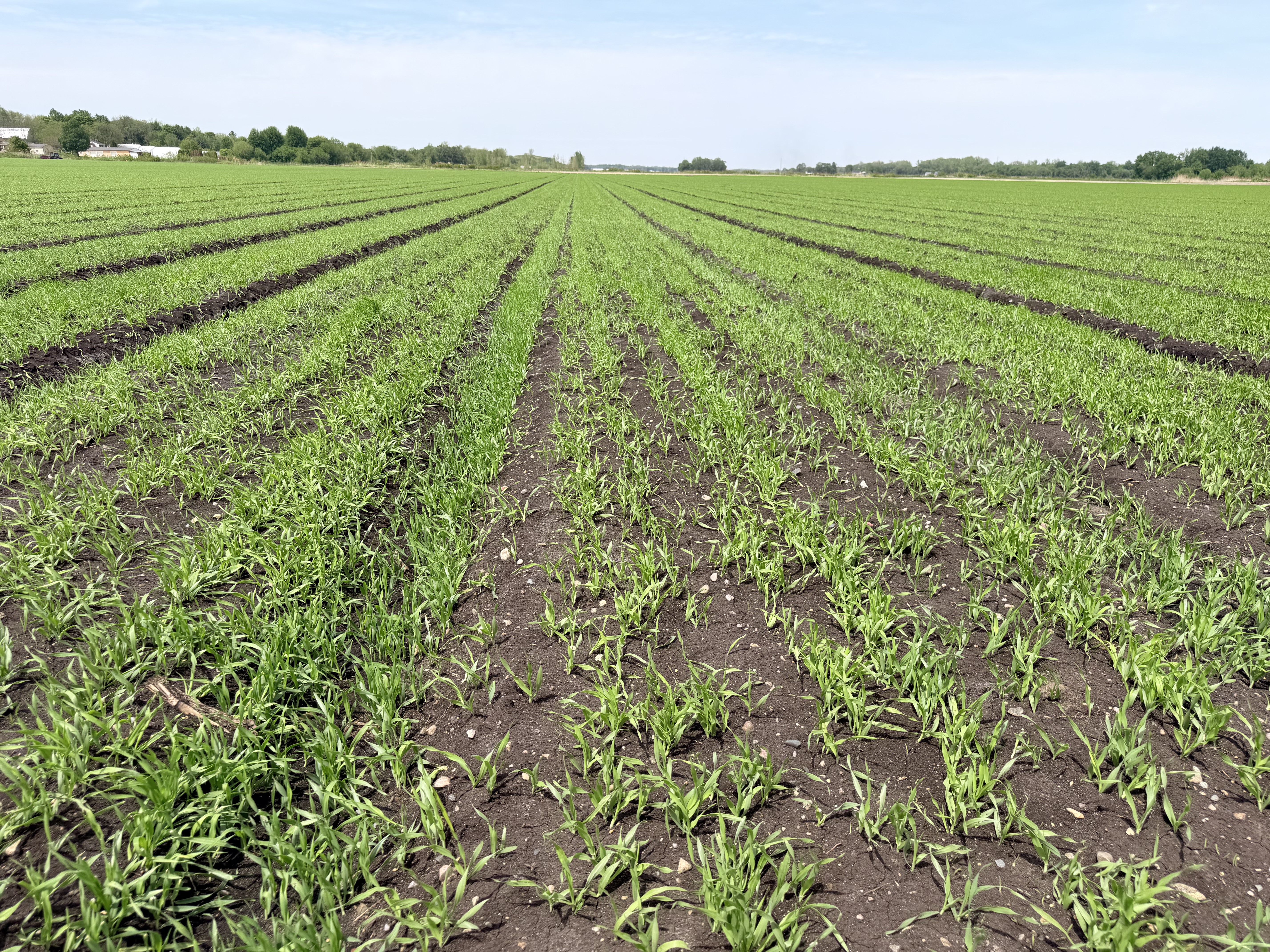
Carrots were in the one- to two-leaf leaf stage in some processing fields in west central Michigan this week. The first application of Lorox had been applied to some fields to help control weeds.
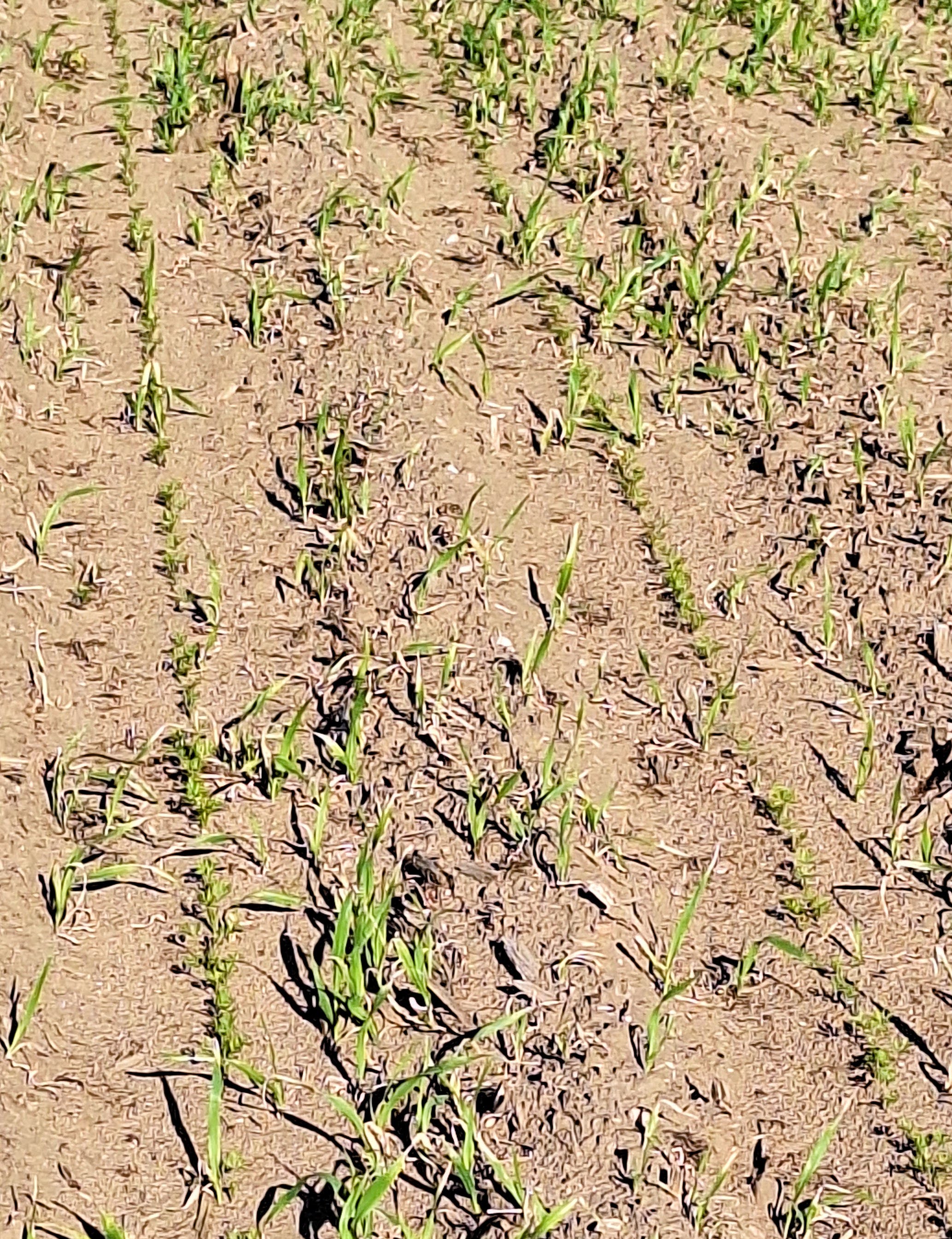
Basketweeding and tine weeding in these crops can be effective but somewhat tricky at this crop stage. Planting into fluffy soil leaves trenches where the seeder passes, and then using a mechanical weeder can then fill in those trenches and bury the young crop. Good setup pays dividends.
MSU’s Enviroweather shows Colorado potato beetle should be emerging in many parts of the state and are reported to be out on volunteer potatoes. They can commonly be found on horsenettle and other nightshade weeds.
Weekly sampling of aster leafhoppers by Michigan State University Extension staff and scouts has begun. Leafhoppers are tested by MSU Plant & Pest Diagnostics for phytoplasmas (the organisms that cause aster yellows). Results are then used to calculate action thresholds, which are shared through text alerts. Growers can use this information to make aster yellows management decisions throughout the growing season. While the thresholds are specifically developed for celery and carrot production, the information may also be useful to producers of other crops that are susceptible to aster yellows. You can learn more and sign up for text alerts. There is no cost to participate. Funding for this project is provided by the USDA National Institute of Food and Agriculture through the Crop Protection and Pest Management Program.
Cucurbits
A few years ago, there was a migration of corn aphids that landed in Michigan squash early in the season. They were low in density but fairly uniformly distributed from the weather system that deposited them. They started to probe the plants they landed on with their mouths and if it was corn they started colonies. For other crops, like squash, they never built populations. But, in the process of probing they spread a virus. I’ve just started seeing these aphids on squash in southwest Michigan this year. Many insecticides kill aphids but don’t prevent their probing as they die. However, oils do prevent probing while killing them and are fairly inexpensive.
Pumpkin planting is approaching and growers are making sure their seeds and other inputs are at the ready. Timely planting of pumpkins is important because delaying too long risks younger plants being exposed to hot late summer temperatures that suppress pollinator activity and blossoming. You can read more about pumpkin planting timing in the MSU Extension article, “Time of pumpkin planting can improve success.”

Brassicas and greens
Cabbage maggots are still being seen on brassica seedlings, with severe damage reported by some. Cold damage has been reported on some brassicas. Early broccoli is still going in.

Fruiting vegetables
Lots of fruiting vegetables are still going in. Some growers are at the point of using between-row postemergence herbicides. Be careful to shield plants from these applications. Tomatoes and peppers can be remarkably sensitive to chemical drift from nearby field applications. Questions may arise as to what to do if symptoms from spray drift are showing up. You can read a detailed breakdown of considerations around spray drift situations in vegetables in the Michigan vegetable crop report from June 11, 2025.
Onions
Onion thrips remain one of the most important insect pests in Michigan onion production, with damage that can reduce plant vigor, lower yield and increase disease risk. MSU Extension recently updated its management guidelines to reflect the addition of a new insecticide for the 2026 season, Vertento. Growers are encouraged to integrate these updated strategies into their spray programs, particularly during the critical mid-season period when thrips populations can increase rapidly under hot, dry conditions.
Sweet corn
Chilling injury has been reported on sweet corn. While threats from many sweet corn pest caterpillars are a ways off yet, keep in mind management resources for later in the season. MSU Extension conducts regular trapping to monitor populations of corn earworm, western bean cutworm and more once they start to appear later in the summer. These numbers are shared in our weekly report, so keep an eye out for that later in the season. Another excellent resource is the “Handy Bt Trait Table - Sweet Corn Production,” which lists Bt traited varieties and key details when considering a variety for caterpillar management.
Farmers invited to join national study on farming practices and soil health
Farmers and ranchers are invited to participate in a free soil health evaluation and contribute to research supporting profitables, resilient and sustainable agriculture. To learn more about the study and how to submit your soil samples, refer to the following article.
Produce Food Safety On-Farm Readiness Reviews
Schedule an On-Farm Readiness Review (OFRR) today for a 2-hour educational visit that takes place during the harvest season and is meant to be casual and low stress. Everything discussed during an OFRR is confidential and focused on ways you can reduce your own risks in relation to produce safety. There is no pressure to take our advice either, we are just here to support you in your produce safety efforts!
Submit your ideas for 2026 GLEXPO sessions or speakers
The Great Lakes Fruit, Vegetable and Farm Market Expo (GLEXPO) is a premier conference for fruit, vegetable, horticulture and farmer market growers to see and learn about all of the latest research and innovations in farming. The GLEXPO board along with Michigan State University Extension hosts a variety of educational sessions and discussions to further the knowledge and resources growers need to be competitive in today’s markets. The 2026 GLEXPO will be Dec. 8-10 at the DeVos Place in Grand Rapids, Michigan.
The GLEXPO organizers and Michigan State University Extension would like your ideas as we plan future education sessions. We want to hear from growers and industry members about ideas for topics and speakers that you think would be of value to your farming operations as well as other growers. To facilitate this endeavor, the Great Lakes Expo board has created a fillable online form. Ideas can be submitted year-round via the online form. For ideas to be considered for inclusion in the 2026 education program, they must be submitted by June 12, 2026.
Access the form to submit your ideas
For more information on the Great Lakes Expo, visit https://glexpo.com.
Events
- June 2-4, 2026: 2026 Conservation Drainage Network Annual Meeting – East Lansing, MI
- June 3, 2026: Beginning Farmer Field Day - Agritourism, Farm Marketing, Farm Business Management – Freeland, MI
- June 10, 2026: Food Grade Grains Field Day at Boyer Livestock – Clarklake, MI
- June 17, 2026: Food-Grade Grains Field Day at Kellogg Biological Station – Hickory Corners, MI
- June 17, 2026: Protecting the Farm: Medicaid & What Farmers Should Know - (Virtual)
- June 18, 2026: Healthy Habitats and Productive Pollinators – Flint, MI
- June 18, 2026: Jackson County Regenerative Ag Field Day - Rives Junction, MI
- June 20, 2026: Michigan Farm Bureau Farmers Teaching Farmers Event – Lansing, MI
- June 22-23, 2026: State of the Western Lake Erie Basin Conference – Adrian, MI
- June 29, 2026: Technical Assistance Provider Training for Pay for Performance Program – Adrian, MI
- June 30, 2026: Monroe Conservation District Hands-On Mushroom Workshop – Temperance, MI
- July 21, 2026: Washtenaw TOPP Farm Tours – Whitmore Lake/Dexter/Willis, MI
- July 31, 2026: Berrien County Organic Agriculture: Tour 3 Value-Added & Agritourism Farms – Sodus/Buchanan/Three Oaks, MI
- August 6, 2026: 2026 Potato Field Day – Lakeview, MI
- August 11, 2026: West Michigan Organic Farm Tour: Explore Farm to Institution Markets from schools to hospitals – Muskegon/Whitehall, MI
- August 18, 2026: Northwest Michigan TOPP Field Day: Farming for People, Purpose, and Profit – Petoskey, MI
- August 20, 2026: Hillsdale Nutrient Management Field Day – Waldron, MI
- September 3, 2026: Cover Crop Workshop at SVREC- Frankenmuth, MI
- August 28, 2026: Washtenaw Conservation District Field Day – Ann Arbor, MI
- September 9, 2026: MSU Extension Monroe County Field Day – Monroe, MI
- September 10-11, 2026: Great Lakes Tek Flex – Benton Harbor, MI
- September 16, 2026: 2026 Midwest Mechanical Weed Control Weed Day – Benton Harbor, MI
- September 22-24, 2026: Farm Science Review 2026 – London, OH
- October 4-6, 2026: Northern Michigan Small Farm Conference – Bellaire, MI
- November 4-6, 2026: Michigan Agritourism 20th Anniversary Convention – Frankenmuth, MI
- December 8-10, 2026: Great Lakes Fruit, Vegetable, & Farm Market Expo – Grand Rapids, MI
This work is supported by the Crop Protection and Pest Management Program [grant no 2024-70006-43569] from the USDA National Institute of Food and Agriculture. Any opinions, findings, conclusions, or recommendations expressed in this publication are those of the author(s) and do not necessarily reflect the view of the U.S. Department of Agriculture.